Podcasting has grown from a niche hobby into one of the most accessible forms of storytelling and media production available today. But before you hit record, there's a question worth answering first: what kind of podcaster are you? The format you choose shapes everything; how you plan episodes, how listeners find and follow your show, and even how you promote it. Understanding the major podcast formats is the first step to building something that fits both your story and your audience.
The Different Types of Podcasts: Episodic vs Series vs Limited Series
Episodic (Stand-Alone Stories)
The episodic format is the most flexible and beginner-friendly style of podcasting. Each episode functions as its own self-contained story or conversation, meaning a listener can jump in at episode 47 and still walk away with a complete experience. Nothing carries over that requires prior context.
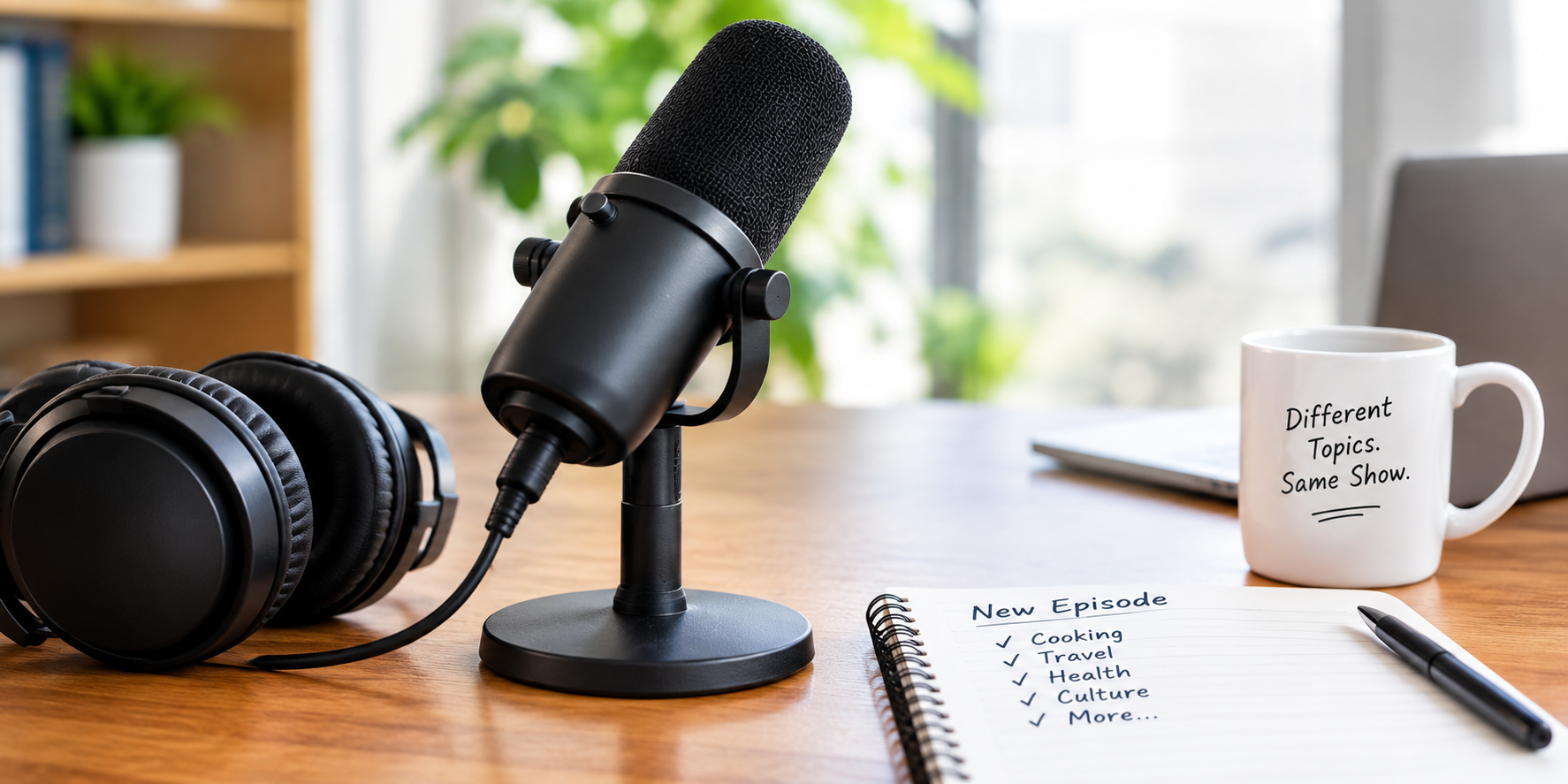
This format is ideal if you want to stretch a single topic across many angles. A podcast about cooking, for example, doesn't need to follow a single narrative, one episode might cover knife skills, the next might interview a chef about regional cuisine, and another might dive into food history. Each installment stands on its own, but together they build a library around a broader theme. This makes episodic shows easy to market individually, since any single episode can serve as someone's entry point, and it gives hosts the freedom to follow curiosity wherever it leads without worrying about continuity.
Series (Serialized Storytelling)
A series podcast tells one long story across many episodes, and it's meant to be listened to in order. Think of it like a novel or a TV drama; each episode builds on the last, characters and plotlines develop over time, and skipping ahead means missing crucial context.
This format is a great fit for investigative journalism, true crime, fiction, or any story with enough depth and complexity to unfold gradually. Serialized podcasts reward patient audiences and tend to build intense loyalty, listeners often binge entire seasons once they're hooked, and cliffhangers between episodes keep people coming back. The trade off is that new listeners generally need to start from episode one, which can make a series harder to market to casual browsers compared to an episodic show.
Limited Series
A limited series sits between the two. It's a serialized podcast, meaning episodes should be listened to in order, but it's built with a defined beginning, middle, and end from the outset. Rather than running indefinitely, a limited series is typically planned to run somewhere between six and twelve episodes, giving it a clear narrative arc: setup, escalation, and resolution.
This format works well for a specific event, a deep dive into one particular case or subject, or a story with a natural finish line. Because the endpoint is built in from the start, limited series podcasts tend to be tightly paced and easier to produce with a clear roadmap, while still giving listeners the payoff of a satisfying, complete arc much like a miniseries on television.
Choosing Your Format
None of these formats is inherently "better" than the others, they simply serve different kinds of stories and different creative instincts. Ask yourself: do you have one big story to tell, or many smaller ones? Do you want listeners to be able to drop in randomly, or do you want them to follow a journey with you from start to finish? Answering that question honestly will point you toward the right format before you record a single episode.
Making It Happen with Chatmosa
Once you've decided how you want to podcast, the next challenge is usually production, and that's where Chatmosa comes in. Chatmosa was built to make podcasting easy and simple, removing the friction that normally comes from juggling multiple pieces of software just to get an episode out the door.
Here's what that looks like in practice:
Record. Open a subscription on Chatmosa and you're ready to go. Hit record and start talking, no complicated setup required.
Enhance visually. While recording, you can upload images directly to the jumbotron, giving your podcast a visual dimension for video platforms or promotional clips, all without leaving the app.
Wrap and edit. When you're done recording, Chatmosa's editing tools are designed to be easy to learn and even easier to use, so cutting, trimming, and polishing your episode doesn't require a steep learning curve or a separate editing suite.
Summarize automatically. The built-in AI recap feature generates a summary of your podcast for you, a great head start for show notes, social captions, or episode descriptions.
Publish everywhere. Once you're happy with the final cut, simply upload. Chatmosa takes care of the RSS feed and handles cross-platform propagation, meaning your episode gets distributed everywhere your audience listens, without you having to manually submit it to each platform.
The idea behind Chatmosa is simple: you've already done the hard part by deciding what kind of podcast you want to make episodic, series, or limited series. Chatmosa handles the rest. No more bouncing between separate apps to record, edit, and publish. It's all in one place, so you can focus on the story you want to tell instead of the software required to tell it.
- #Technology